admin

Fantasizing the World

Only about a hundred years old, the dystopian novel is one of the newest forms of narrative in Western literature. This genre’s writers boldly predict a future that, as both the narrator and the reader would wish, would be better unrealized. The dystopian novel thus speaks of an undesirable future reality. For centuries, the mimetic

Fantasizing the World Read More »

Auris Radzevičius-Radzius

*** close your eyes for a moment! orderlies rush forward and silver bugles shine in their hands     *** The crowd was laughing, mad, and joyous – The savior’s ship, surrounded by sirens, emerged from the mists, It draws near as the crowd becomes silent, whispering angrily – Sindbad has brought a new illness

Auris Radzevičius-Radzius Read More »

Corpses and Flowers

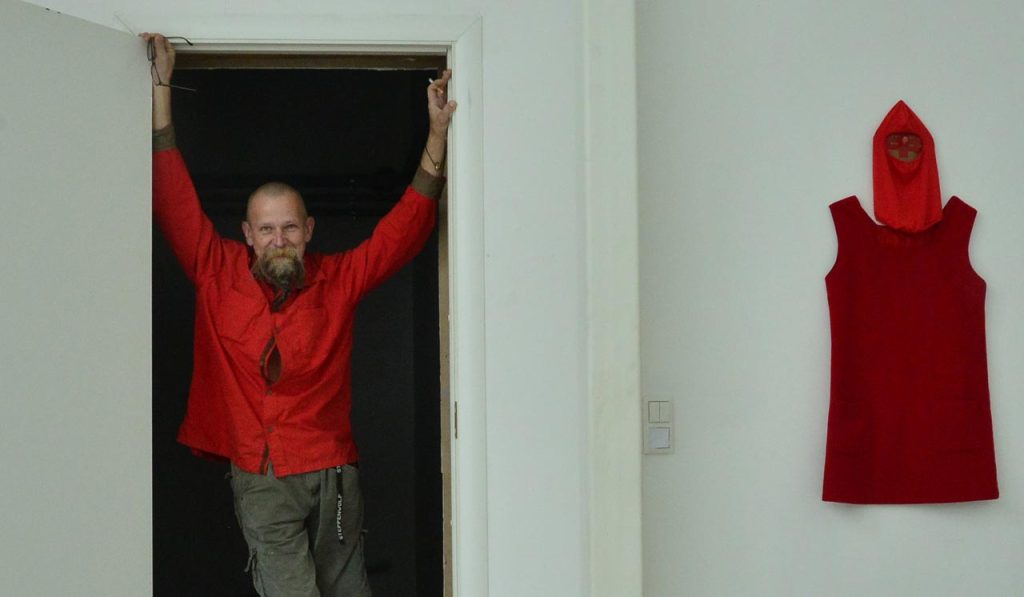
In the Lithuanian cultural scene, Auris Radzevičius-Radzius (1965–2019) is known first as a visual artist and only then as a writer. During his life Radzevičius published just the one poetry book titled Ornamentas vietoj laivo (Ornament Instead of a Ship, 1990) as part of the Lithuanian Writers’ Union’s First Book series. Over time, it became

Corpses and Flowers Read More »

Poem-chameleons, cross-sections of nature and art, and queer experiences

Dovilė Bagdonaitė made her debut with the collection of poems Mėlynojo banginio širdis (The Heart of the Blue Whale) after winning the First Book competition organized by the Lithuanian Writers’ Union. I was curious to see how her literary career would develop further: when I was reading her first book, I felt that Bagdonaitė had

Poem-chameleons, cross-sections of nature and art, and queer experiences Read More »

Dovilė Bagdonaitė

Academic Drawing Remember how that happened in our drawing class? We don’t greet the teacher anymore, even though his dog was beautiful. It was a boycott from both sides. In front of the scribbled walls we conspired, sitting on the windowsills, gazing across the street toward the exhibition hall – people live out there while we sweat

Dovilė Bagdonaitė Read More »

A beautiful trap

I can’t remember a time when I didn’t see translation as a matter of course. Whenever I read something and decisively thought it was good, I just knew it had to be translated. Other people need to read this. An instant response, an urgency to share. There are many reasons for this, I suppose. A reader’s

A beautiful trap Read More »

Scroll to Top